Giant breed dogs — Great Danes, Mastiffs, Newfoundlands, Saint Bernards, Bernese Mountain Dogs, Great Pyrenees — are among the most rewarding dogs to own and among the most commonly under-served at the grooming salon. Most standard grooming setups aren't built for 100+ pound dogs, and most online grooming advice is written with a Labrador or a Cockapoo in mind.
This guide covers the real logistics of grooming giant breeds: what equipment actually matters, how to manage the shedding, and what to look for when you're booking a groomer in Sacramento.
The Core Challenge: Scale
Everything about grooming a giant breed takes longer and requires more equipment. A Saint Bernard or Newfoundland can take 3–5 hours for a full groom — bath, dry, brush-out, nail trim. That's not inefficiency; it's physics. The coat volume, water absorption, and drying time scale with body mass.
The grooming setups that work for a 30-pound dog don't always work for a 150-pound one:
- Standard tubs aren't deep enough or wide enough for most giant breeds. Walk-in tubs or ramp-access raised tubs are necessary.
- Standard tables have weight limits that most giant breeds approach or exceed. Reinforced hydraulic tables rated for 200+ lbs are the professional standard.
- Cage dryers don't work well on thick double coats. High-velocity force dryers are required to actually move water out of the undercoat.
When booking a groomer in Sacramento, ask directly: Do you have a walk-in tub? What's your table weight rating? Do you have a high-velocity dryer? Groomers who work regularly with giant breeds will answer these questions without hesitation.
Coat Types in Giant Breeds
Giant breeds have widely varying coat types, and the grooming approach differs significantly:
Short, smooth coats (Great Danes, Mastiffs, Boxers)
These are actually the easiest to groom. Weekly brushing with a rubber curry brush or a shedding blade keeps the coat clean and reduces loose hair. Bathing monthly is usually sufficient. The main challenge is logistics — you're bathing a 150-pound animal — not technique.
Double coats (Bernese Mountain Dogs, Great Pyrenees, Newfoundlands, Saint Bernards)
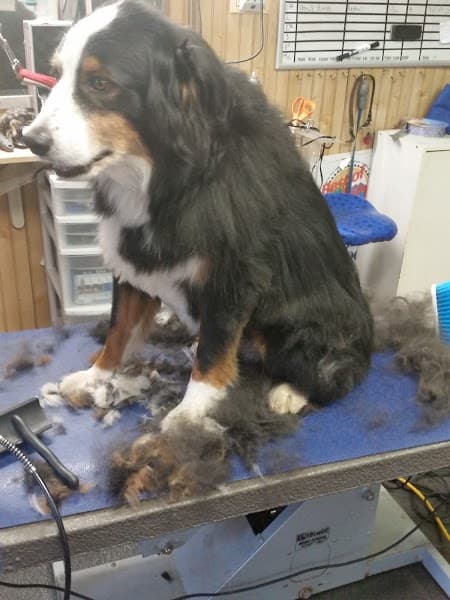
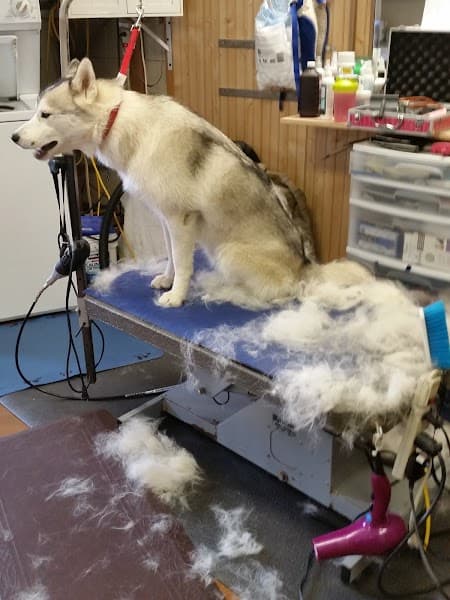
This is where giant breed grooming gets complex. A thick double coat holds an enormous amount of water, takes hours to dry, and sheds prodigally. Deshedding treatments — specialized shampoo, conditioner, and a thorough force-dry and brush-out — dramatically reduce in-home shedding and are worth doing every 6–8 weeks.
Never shave a double-coated giant breed. The double coat regulates body temperature in both directions — it insulates in winter and blocks radiant heat in Sacramento summers. Shaving disrupts this system, can cause permanent coat texture changes, and leaves the skin unprotected from sun exposure.
Wire coats (Irish Wolfhounds, some terrier-giant crosses)
Coarser, more textured coats that require hand-stripping or rolling to maintain correct texture. Less common in the giant breed category, but if you have an Irish Wolfhound, look specifically for a groomer with wire coat experience.
Deshedding: The Most Important Service for Double-Coated Giants
If your Newfoundland or Bernese Mountain Dog is carpet-bombing your house with fur, a professional deshedding treatment is the most impactful thing you can do. The process:
- Pre-bath brushing to remove surface tangles
- Deshedding shampoo applied and worked into the undercoat
- Deshedding conditioner, left on for several minutes
- Thorough rinse
- High-velocity force drying to blow the loosened undercoat out of the coat
- Extensive brush-out with an undercoat rake or slicker
Done correctly, a deshedding treatment removes the equivalent of a small pillow's worth of loose undercoat per session. Done incorrectly (especially without force drying), it's mostly pointless — the loose hair stays in the coat.
For at-home maintenance between professional deshedding sessions:
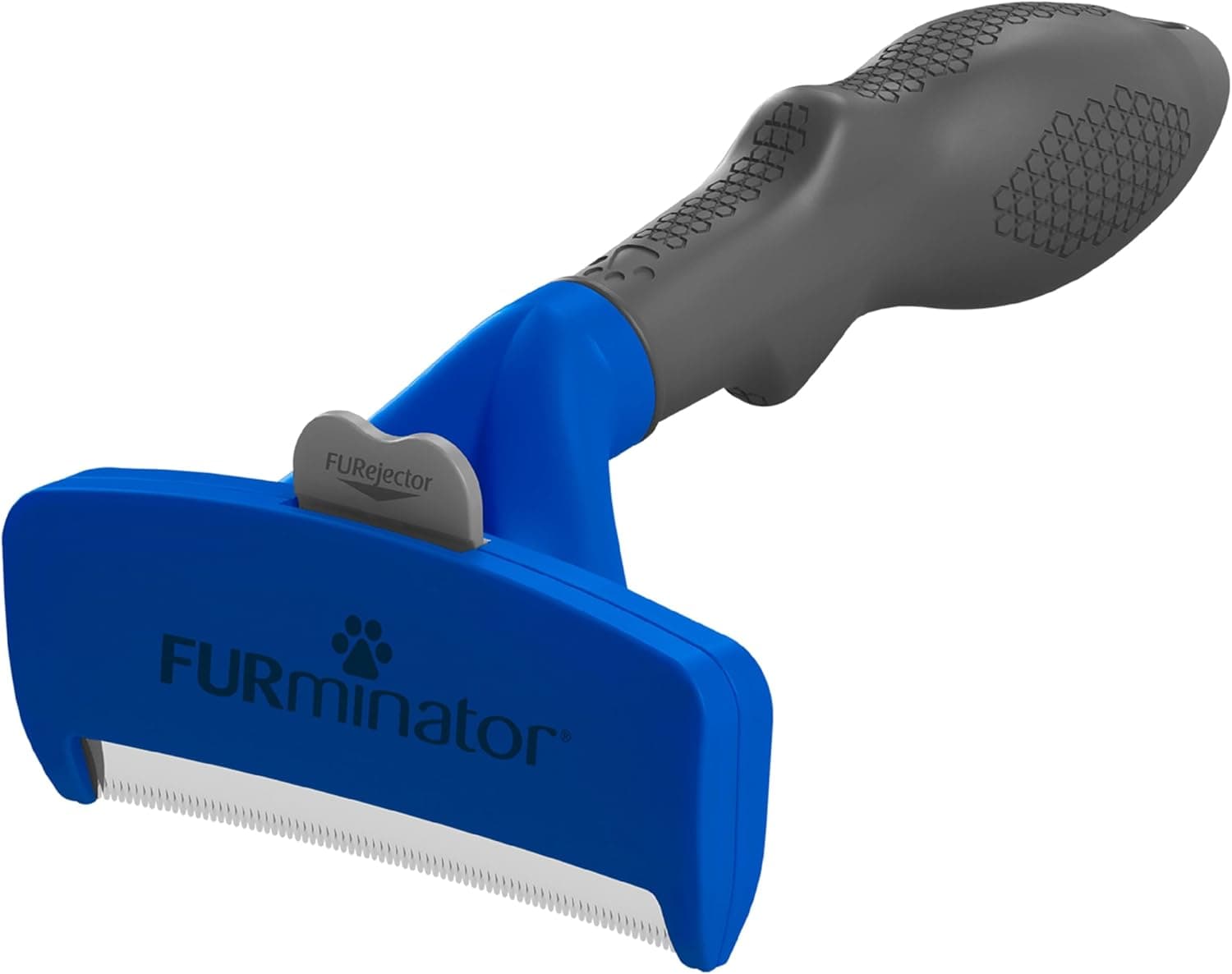
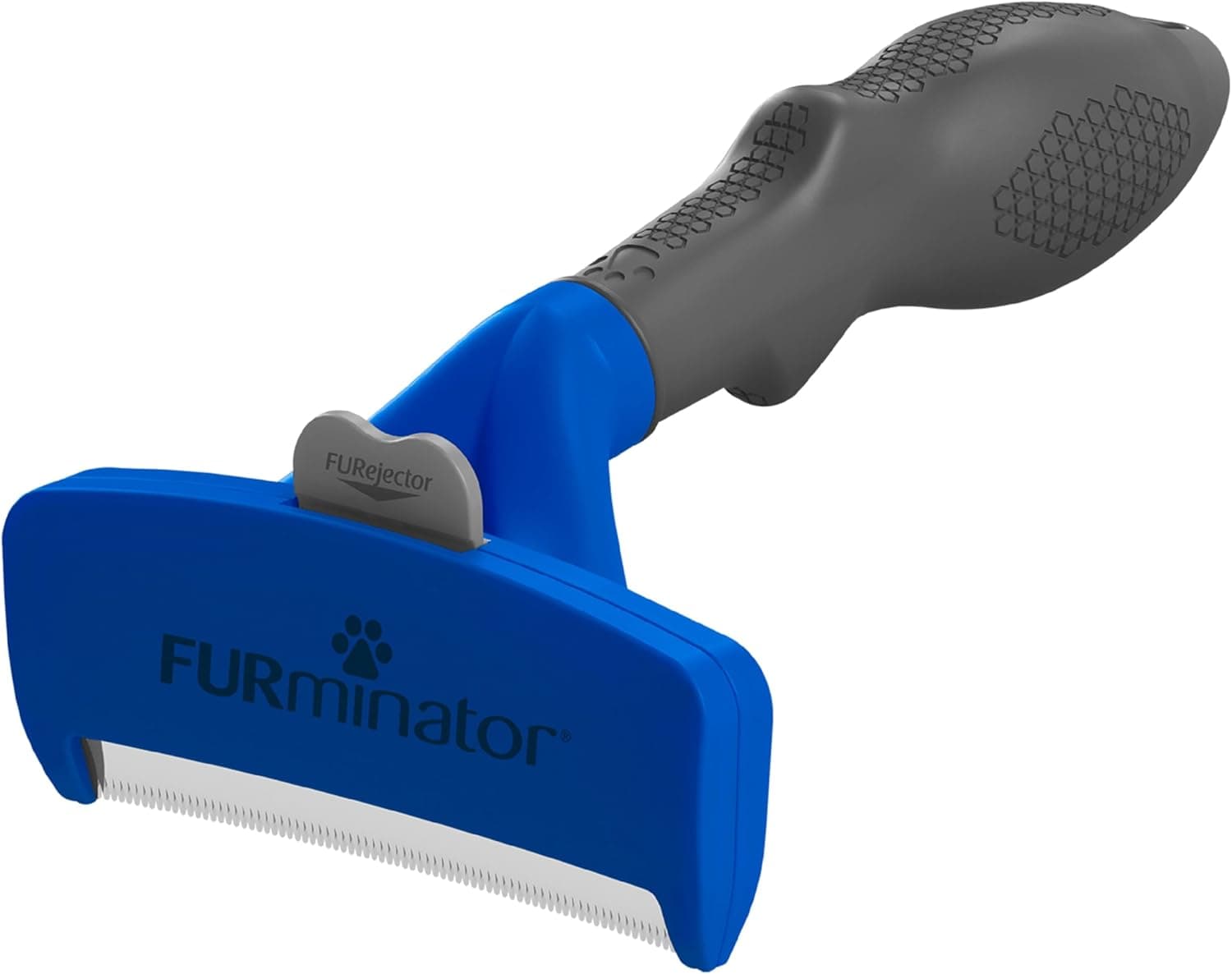
FURminator Undercoat Deshedding Tool
Reaches through the topcoat to safely remove loose undercoat without cutting the guard hairs. Dramatically reduces shedding on Bernese Mountain Dogs, Great Pyrenees, Newfoundlands, and similar double-coated giants. Use 1–2 times per week between professional appointments.
Shop on Amazon →As an Amazon Associate we earn from qualifying purchases — at no extra cost to you.
Drying: The Bottleneck
Drying a double-coated giant breed by air is a hours-long process that often results in a dog that smells mildewy for days — the undercoat stays damp long after the topcoat appears dry. A high-velocity dryer changes this completely.
At the professional level, groomers use stand-mounted or handheld force dryers that blow water out of the coat rather than evaporating it slowly. For owners who bathe their giant breeds at home:
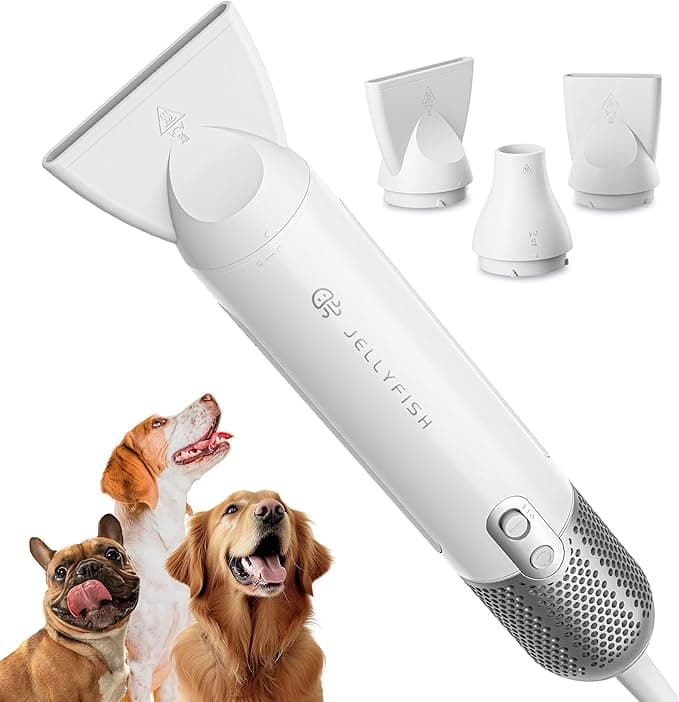
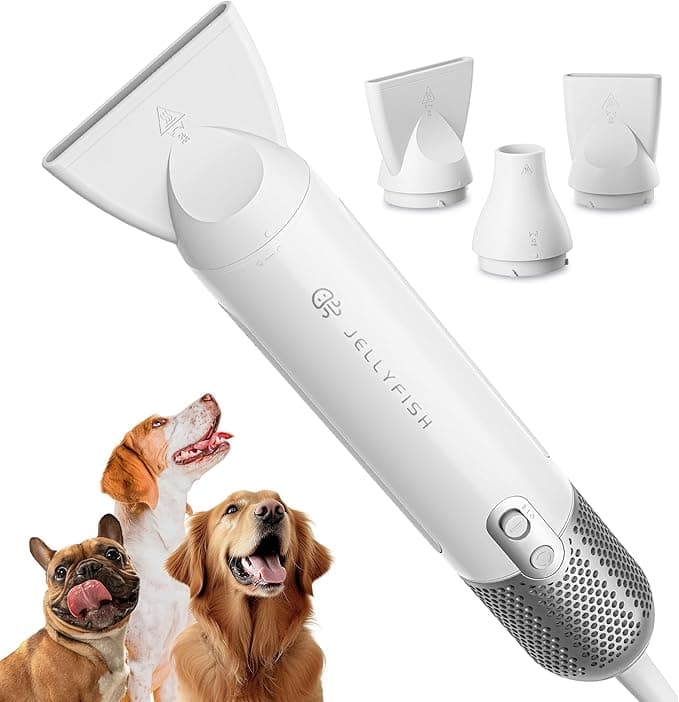
Jellyfish Handheld High Velocity Dog Dryer
Consumer-grade force dryer that significantly speeds up drying on thick double coats. Blasts water out of the undercoat rather than waiting for evaporation. Cuts drying time from 2–4 hours to 30–60 minutes on most giant breeds. Attach the concentrator nozzle for directional drying.
Shop on Amazon →As an Amazon Associate we earn from qualifying purchases — at no extra cost to you.
Use the dryer in the direction of coat growth, working section by section. Brush through the coat as it dries to prevent any remaining tangles from setting.
Nail Trimming
Giant breed nails are significantly thicker and harder than small dog nails. Standard guillotine-style nail clippers often struggle, and rotary grinders work well but take longer. For dogs who are weight-bearing on all four paws correctly, nails should just touch the floor. For many giant breeds, nails grow faster than the recommended 4–6 week grooming interval, and a monthly nail trim is worthwhile.
If your dog resists nail trimming, counter-conditioning with high-value treats works — but with a 150-pound dog, cooperation matters more than compliance. A groomer who regularly handles giant breeds will often be better equipped to handle a resistant dog safely than a salon used to smaller dogs.
Booking Tips for Sacramento Giant Breed Owners
- Call ahead and give the exact weight. Many groomers charge a size surcharge for dogs over a certain weight, and some have maximum weight limits on their equipment. Knowing upfront avoids awkward surprises.
- Book morning appointments. Giant breed grooms run long. An afternoon booking can create time pressure for the groomer; a morning slot gives everyone room to do the job properly.
- Ask about ramps. If your dog has hip dysplasia or other mobility issues — common in giant breeds — confirm that the groomer has ramp access to the tub and table rather than requiring the dog to jump.
- Mention coat condition honestly. If your dog hasn't been professionally groomed in 6 months and is in a heavy shed cycle, say so. A good groomer will schedule appropriate time; a groomer who doesn't know what they're walking into may rush.
FAQ
How often should giant breeds be professionally groomed?
For smooth-coated giants (Great Danes, Mastiffs): every 6–8 weeks for a bath and nail trim is usually sufficient. For double-coated giants (Newfoundlands, Bernese Mountain Dogs, Saint Bernards): every 6–8 weeks with a deshedding treatment keeps shedding manageable. During heavy seasonal shedding in spring and fall, more frequent deshedding sessions (every 3–4 weeks) make a significant difference.
Should I shave my giant breed in summer?
No — especially for double-coated breeds. The double coat is an insulation system that works in both directions. In Sacramento's hot summers, the undercoat traps cooler air near the skin and the topcoat blocks radiant heat. Shaving removes that system and exposes the skin to direct sun. The exception: if a coat has become so severely matted that dematting is not possible, a shave-down may be necessary for the dog's welfare — but this is a reset, not a maintenance strategy.
Why does my giant breed smell bad after bathing at home?
Almost always incomplete drying. Thick double coats hold water deep in the undercoat, and air-drying leaves the lower layers damp for 12–24 hours. That damp environment breeds the bacteria that cause the mildewy smell. The fix is a force dryer — see the product recommendation above. A thorough force-dry followed by a brush-out should leave even a Newfoundland smelling clean.