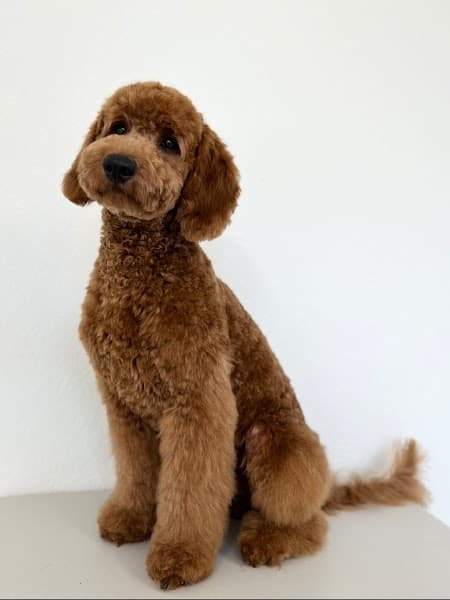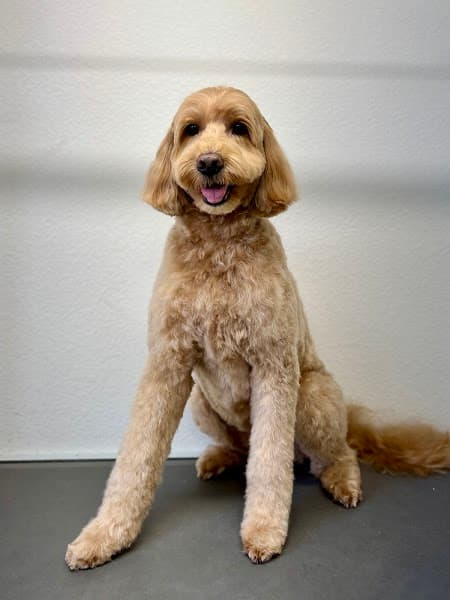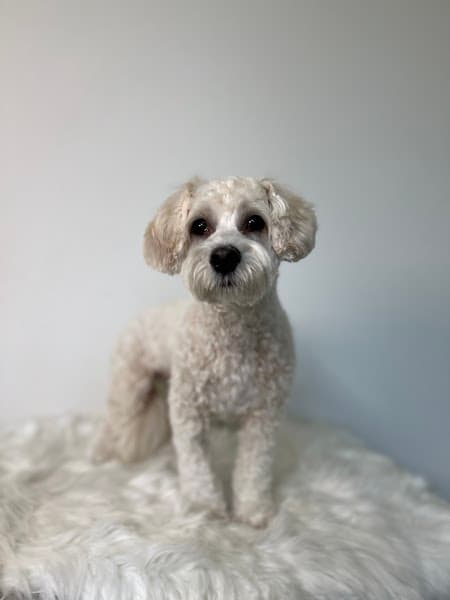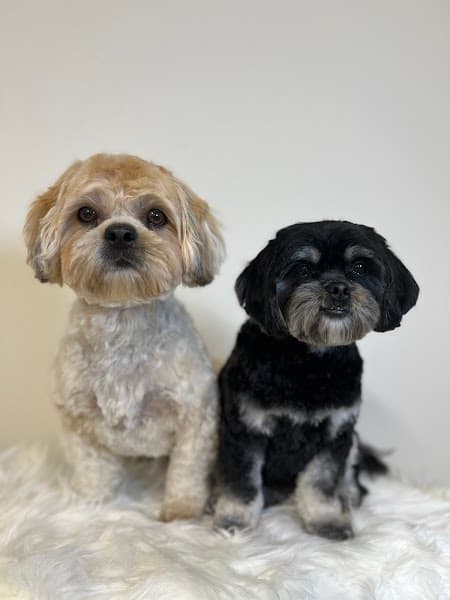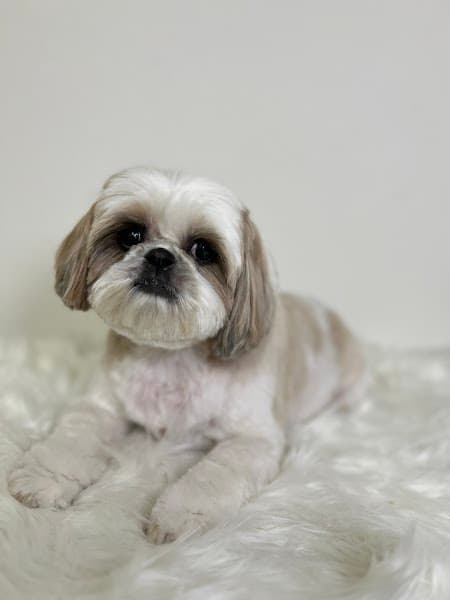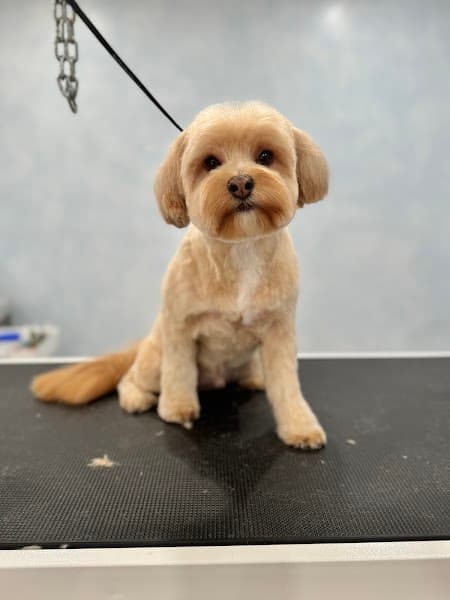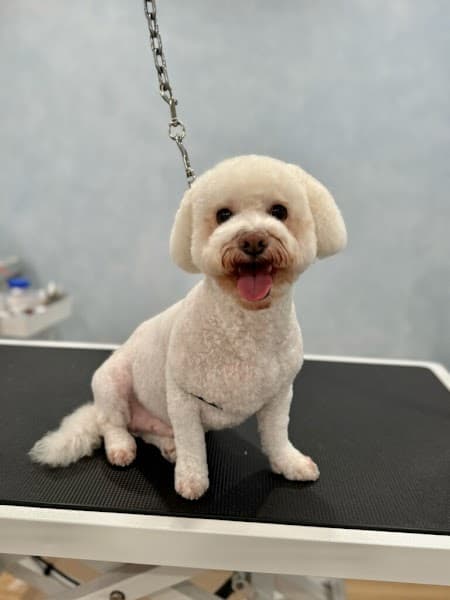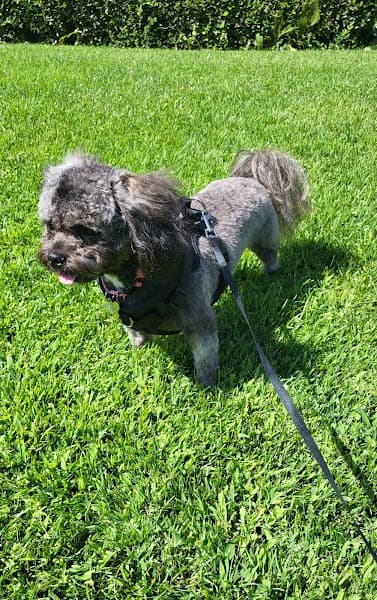
Goldendoodles are one of the most popular breeds in Sacramento, and also one of the most frequently over-groomed, under-brushed, or unintentionally shaved down to the skin because their owners didn't realize what they were dealing with. The root cause is almost always the same: the coat type wasn't identified early, and the wrong tools or schedule got established before the mats had a chance to announce themselves.
This guide covers everything you need to maintain a Goldendoodle coat at home — from figuring out which of the three coat types your dog has, to washing, drying, trimming, and dealing with mats before they become an emergency vet-adjacent situation.
The Three Goldendoodle Coat Types
Not all Goldendoodles look the same, and that's not just a size or generation thing — it's genetics. The Poodle and Golden Retriever contribute very different coat structures, and the ratio between them varies with every litter. Before you buy a single grooming tool, you need to know which type you're working with.
Curly Coat
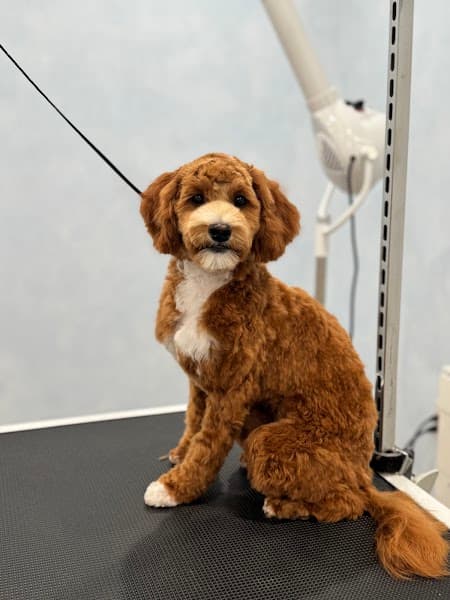
The Poodle-dominant expression. Tight, springy curls that stay close to the body. These coats don't shed much (which is why doodles are marketed as hypoallergenic), but the upside has a real downside: shed hairs get trapped inside the curl instead of falling to the floor. Without regular brushing, those trapped hairs knot around live ones within days. Curly-coated Goldendoodles mat the fastest and require the most consistent at-home maintenance — every one to two days.
Wavy Coat
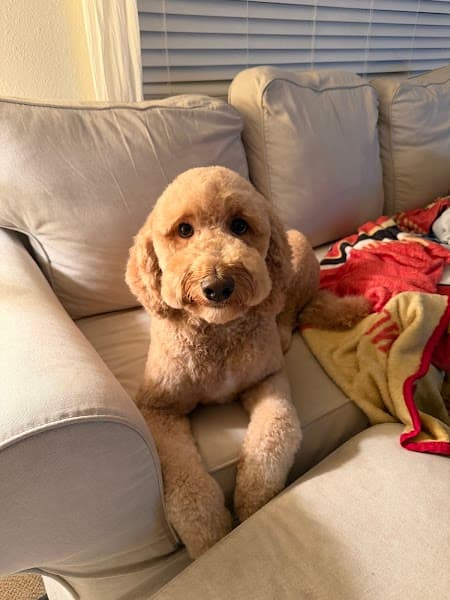
The most common coat type, sometimes called "fleece." Loose, flowing waves that sit somewhere between the Poodle curl and the Golden's flat fur. Low to moderate shedding. Mats form in the usual friction spots — behind the ears, armpits, collar line — but the coat is more forgiving than a tight curl. Brushing two to three times per week is usually enough to stay ahead of tangles.
Flat Coat
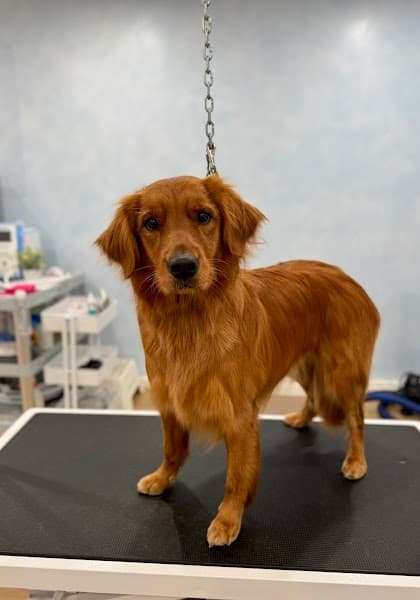
The Golden-dominant expression. Straighter, coarser fur that sheds more visibly. Often mistaken for a purebred Golden Retriever at a distance. These dogs are the easiest to maintain but owners frequently over-bathe them trying to manage the shedding, which strips coat oils and leads to dry, brittle fur. Weekly brushing, a deshedding treatment every few weeks, and bathing only when actually dirty is the right approach.
How to tell which type you have: Run your fingers through the coat against the direction of growth. If the fur springs back into ringlets, it's curly. If it falls in loose S-waves, it's wavy. If it lays flat and comes away with loose fur on your hand, it's flat.
Brushing: The Only Thing That Actually Prevents Mats
Every matted Goldendoodle that comes into a Sacramento grooming salon started with an owner who was brushing the surface. You can run a paddle brush across the top of a doodle coat for five minutes and achieve nothing — the mat forms underneath, at skin level, where the shed hairs accumulate.
Line-brushing is the technique: Part the coat in a horizontal line, hold back the fur above it, and brush from that line downward. Move the part up an inch, repeat. You're working section by section from the skin outward, not skimming the top.
The tools matter:
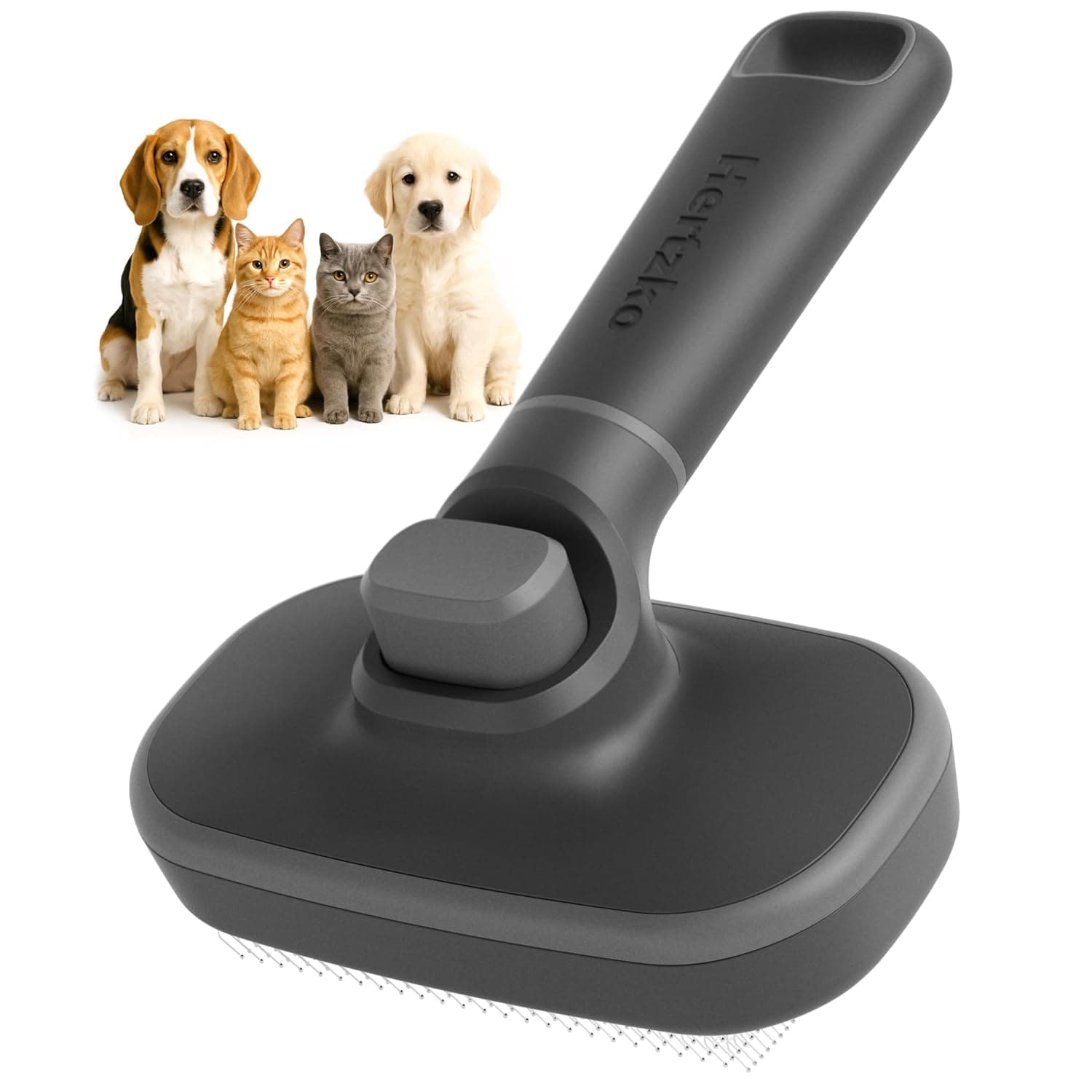
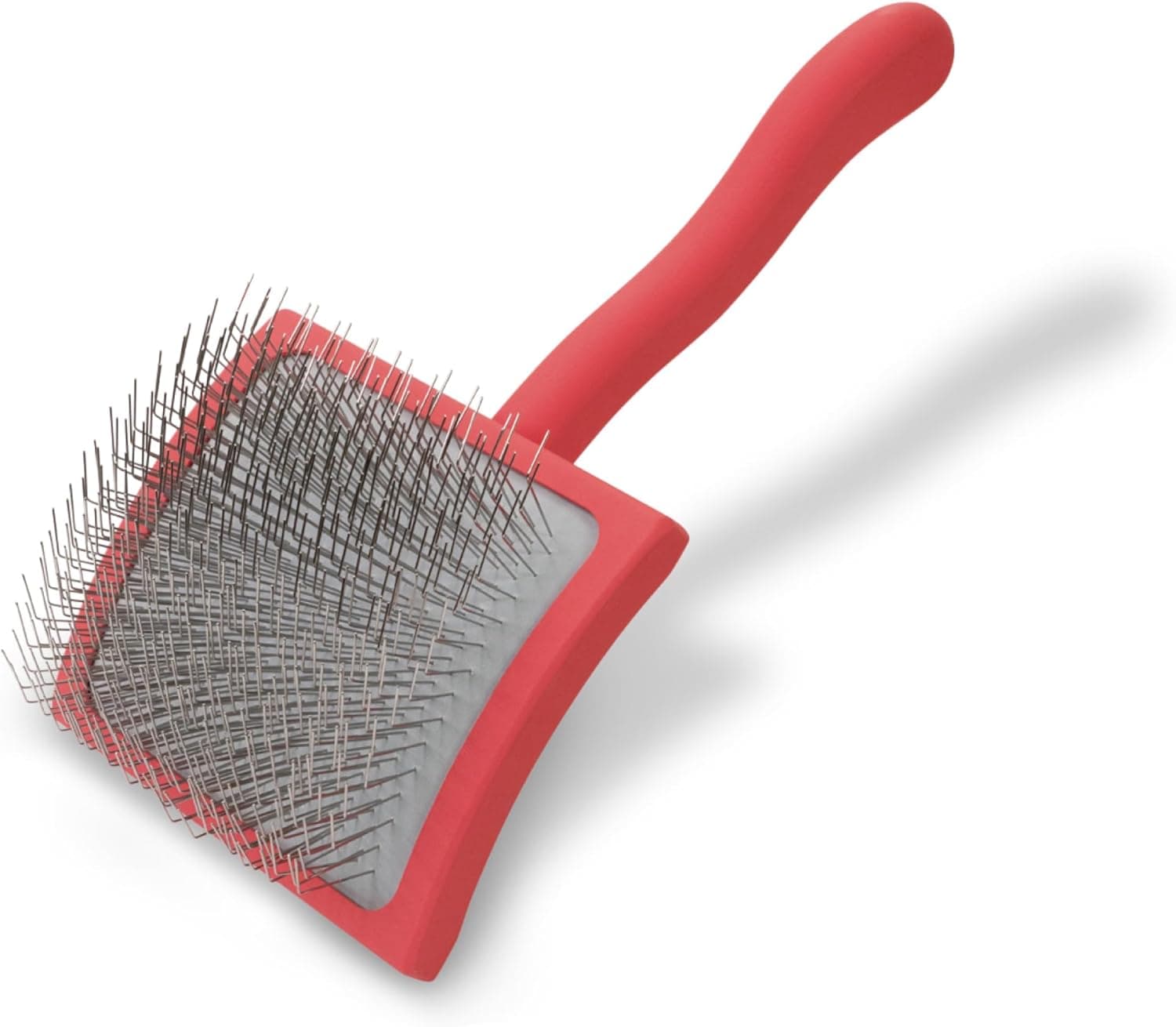
Hertzko Self-Cleaning Slicker Brush
Fine, bent wire bristles reach through doodle coats to detangle from the skin out without scratching. The self-cleaning button retracts the pins so you can clear collected fur with a single press — saves real time during a thorough brush-out. A solid starting brush for at-home Goldendoodle maintenance.
Shop on Amazon →As an Amazon Associate we earn from qualifying purchases — at no extra cost to you.
After brushing, always finish with a metal comb. Run it from skin to tip through every section you brushed. If it catches — if there's any resistance at all — you haven't finished. Go back with the slicker. This is how professional groomers check their own work, and it's the single habit that separates owners who "brush regularly" from owners whose dogs never mat.
Brushing Frequency by Coat Type
| Coat Type | At-Home Brushing | Professional Groom |
|---|---|---|
| Curly | Every 1–2 days | Every 6–8 weeks |
| Wavy | 2–3× per week | Every 6–8 weeks |
| Flat | Weekly | Every 8–12 weeks |
If your Goldendoodle is in a longer style (more than 2–3 inches of coat), push the frequency up one tier. Length amplifies the matting risk dramatically.
Bathing a Goldendoodle at Home
How Often
Every 4–6 weeks is right for most Goldendoodles. Bathing too frequently strips the natural oils that keep the coat healthy and pliable — a dry, brittle coat mats faster than a well-conditioned one. Exception: if your dog rolled in something, bathe immediately and condition thoroughly afterward.
Sacramento summers are dusty and hot, which means dogs often get bathed more frequently here than the national average. That's fine, provided you follow up every bath with conditioner.
Pre-Bath Brushing Is Non-Negotiable
Never put a matted or partially-tangled Goldendoodle in a bath. Water causes mats to tighten and felt — a brush-out that would have taken ten minutes before the bath becomes an impossible task after. Brush fully, run the metal comb to confirm, then bathe.
The Right Wash Sequence
- Soak the coat thoroughly — doodle fur repels water until fully saturated
- Apply shampoo from neck to tail, work it into the skin
- Rinse completely (product left in the coat attracts dirt and contributes to matting)
- Apply conditioner, let it sit for 2–3 minutes
- Rinse thoroughly
Drying
High-velocity drying — using a force dryer to blow water out of the coat — is the professional standard. It's faster, it straightens the coat enough to brush through, and it prevents the damp-coat mildew smell that plagues doodles that air-dry for hours. If you're air-drying at home, keep your dog in a warm area, brush through the coat as it dries, and expect it to take 2–4 hours for a full-coated Goldendoodle.
A detangling spray makes drying and post-bath brushing significantly easier:
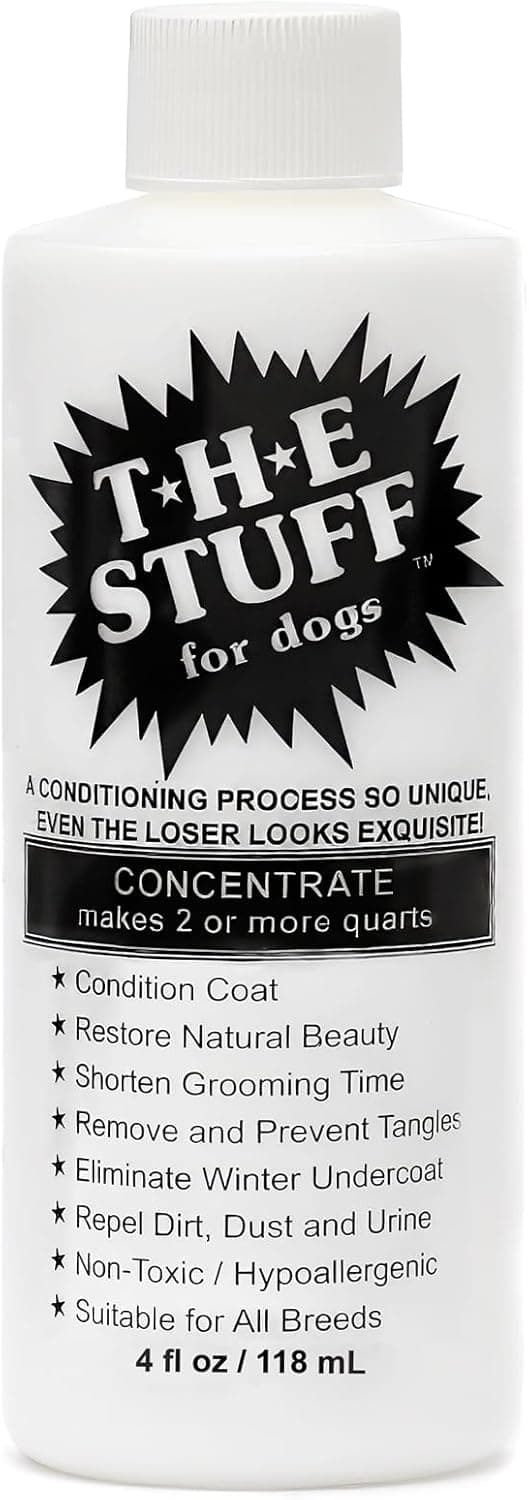
The Stuff Detangler & Conditioner Spray
A light-bodied conditioning spray that softens doodle coats before and after bathing, making the brush glide through tangles without the resistance that causes breakage. Safe for daily use. Particularly effective on wavy coats that become stiff after air-drying.
Shop on Amazon →As an Amazon Associate we earn from qualifying purchases — at no extra cost to you.
Trimming at Home
Most owners can manage face, paw, and sanitary trims between professional appointments. Full body clips are harder — not because the technique is complicated, but because getting an even length across a wriggly dog without leaving obvious track marks takes practice.
What You Can Reasonably DIY
- Face: Keeping the hair out of your dog's eyes. Use blunt-tipped scissors and trim straight across, or slightly rounded.
- Paw pads: Trim the fur growing between the pads flush with the pad surface. This prevents slipping on hard floors and keeps debris from packing into the paw. Small, curved scissors or a small trimmer work best.
- Sanitary areas: Keeping the fur trimmed short around the groin, belly, and base of the tail. Hygiene-critical, especially for dogs in longer styles.
- Ears: Trim the fur at the ear opening and on the lower flap to improve airflow. Don't dig into the ear canal.
Body Clipping
If you want to do body work at home, invest in a proper clipper. Craft-store trimmers and cheap pet clippers bog down in doodle coats and pull rather than cut — that's how dogs develop a fear of grooming.
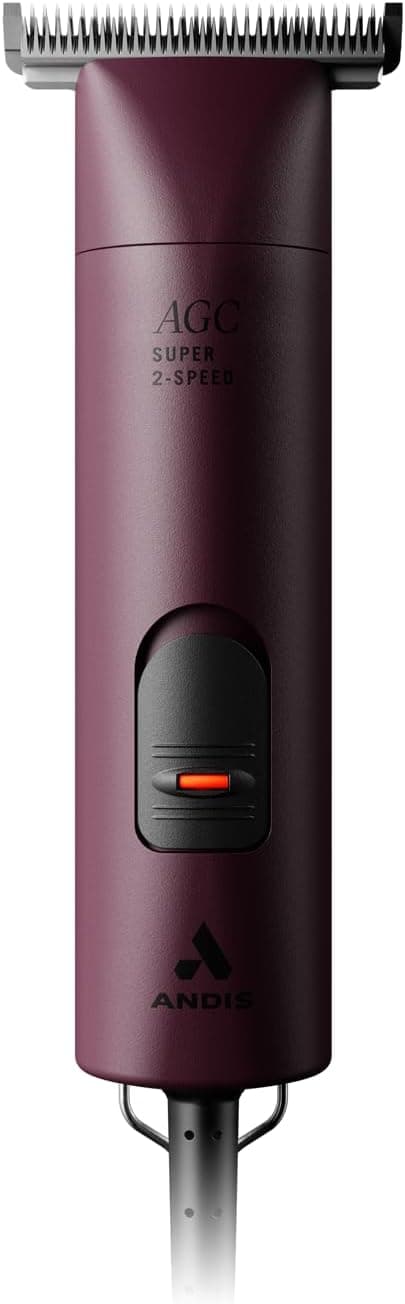
Andis ProClip AGC2 Two-Speed Clipper
The clipper most professional groomers keep as their primary or backup tool. Two-speed rotary motor handles thick, curly doodle coats without bogging down. Works with standard snap-on blade guards for length control. A genuine investment, but it will outlast three cheap clippers and your dog will be far more comfortable with it.
Shop on Amazon →As an Amazon Associate we earn from qualifying purchases — at no extra cost to you.
Length Guide
There's no universal right answer for how short to cut a Goldendoodle, but here's a practical framework:
| Season | Suggested Length | Notes |
|---|---|---|
| Sacramento summer | 1–2 inches | Reduces heat retention; easier to keep mat-free |
| Fall / spring | 2–3 inches | The classic "teddy bear" range |
| Winter | 3–4 inches | Provides warmth; requires more brushing |
Important: Never shave a Goldendoodle to the skin unless medically necessary. The coat regrowth can come in with a different texture (often coarser and frizzier), and the skin is completely unprotected from sun exposure.
Dealing With Mats
Assess Before You Start
Run your hand through the coat and find every mat before you attempt anything. Small, soft mats — ones you can push a finger through — can usually be worked out. Mats that feel hard, dense, or are sitting tight against the skin need a professional.
Dematting Technique
For workable mats, apply detangling spray and let it soak in for a minute. Hold the base of the mat between two fingers to protect the skin from pulling. Use a metal comb to work from the outside edge of the mat inward — you're separating one hair at a time, not yanking through the center. Patience here is not optional.
When to Stop and Call a Groomer
- You can feel the mat is against the skin and you can't get a comb between it and the skin
- Your dog is showing stress signals (panting, pulling away, whale eye)
- The mat covers more than a palm-sized area
- The mat is around a joint, in the armpit, or near a delicate area
A professional groomer can shave out a mat in seconds without the trauma that comes from a prolonged at-home battle. Most Sacramento groomers will tell you honestly whether a coat can be de-matted or whether a reset clip is the kinder option.
Prefer to Leave It to a Pro?
At-home maintenance keeps the coat healthy between appointments — but professional grooming is still part of the equation for most Goldendoodles. Find a Sacramento groomer who has specific experience with doodle coats.
Prefer to leave it to a pro? Find a Sacramento Goldendoodle grooming specialist near you. →
FAQ
How often should you groom a Goldendoodle?
Professional grooming every 6–8 weeks is the standard for curly and wavy Goldendoodles. Flat-coated dogs can go 8–12 weeks. At home, brushing frequency matters more than bath frequency: curly coats need brushing every 1–2 days; wavy coats, 2–3 times per week; flat coats, weekly. Skipping professional appointments for longer than 10–12 weeks almost always results in a coat that requires shaving rather than trimming.
What length should I cut my Goldendoodle's hair?
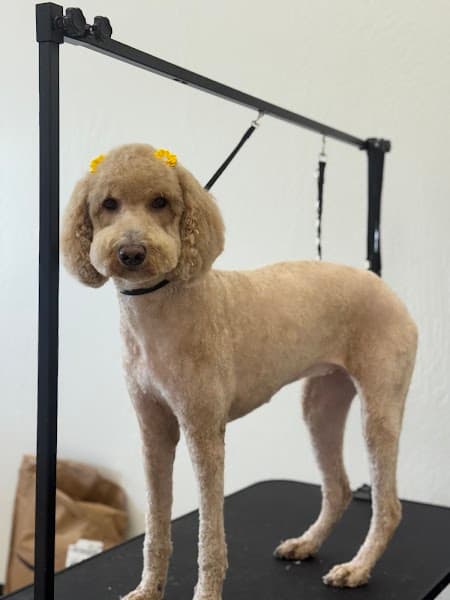
For Sacramento's climate, 1–2 inches in summer and 2–3 inches the rest of the year works well for most owners. The "teddy bear" look — about 2 inches on the body, slightly longer on the legs, rounded face — is the most popular style and the most practical for at-home maintenance. Avoid going shorter than half an inch unless medically indicated, and never shave to the skin.
Can I groom my Goldendoodle at home?
Yes, with realistic expectations. Face trims, paw pad trims, sanitary areas, and regular brushing are all manageable at home with the right tools. Full body clipping is achievable with a quality clipper and some practice, though it takes several sessions before results look consistent. The main risk isn't technique — it's skipping steps. Bathing without brushing first, not checking with a metal comb after brushing, or trimming a mat-hidden coat are the common mistakes. If you're unsure, a professional groom every 6–8 weeks with good at-home brushing between appointments is a reliable combination for most Goldendoodle owners.